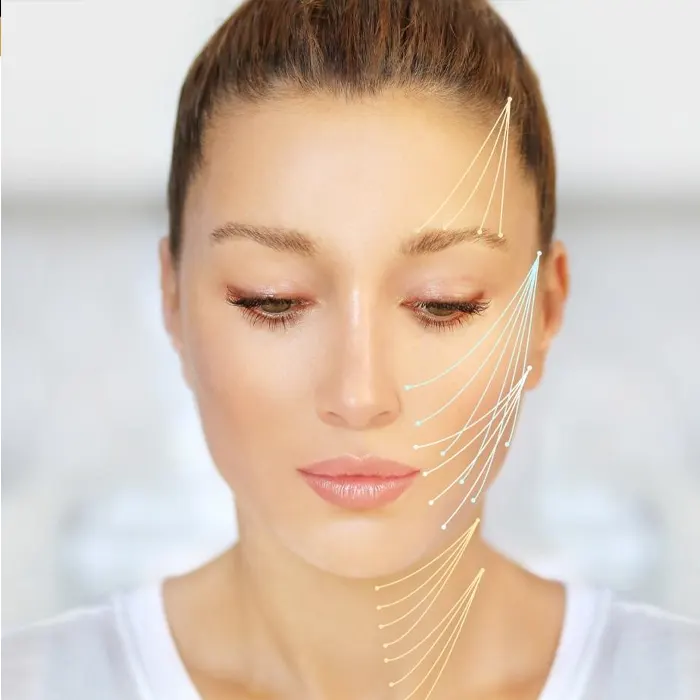
This post is dedicated to all PDO Thin Thread & Skin Rejuvenation/Tightening related topics.
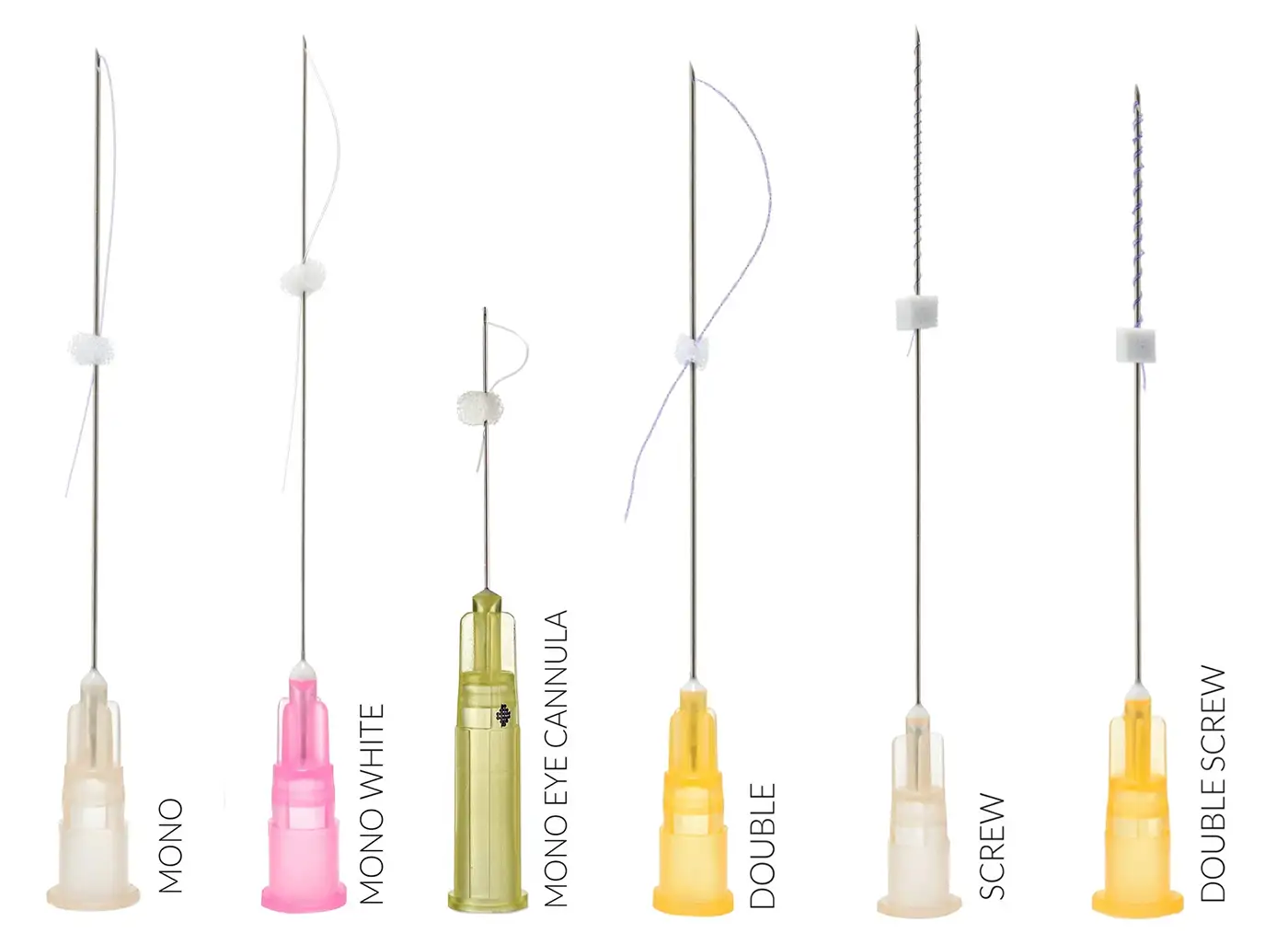
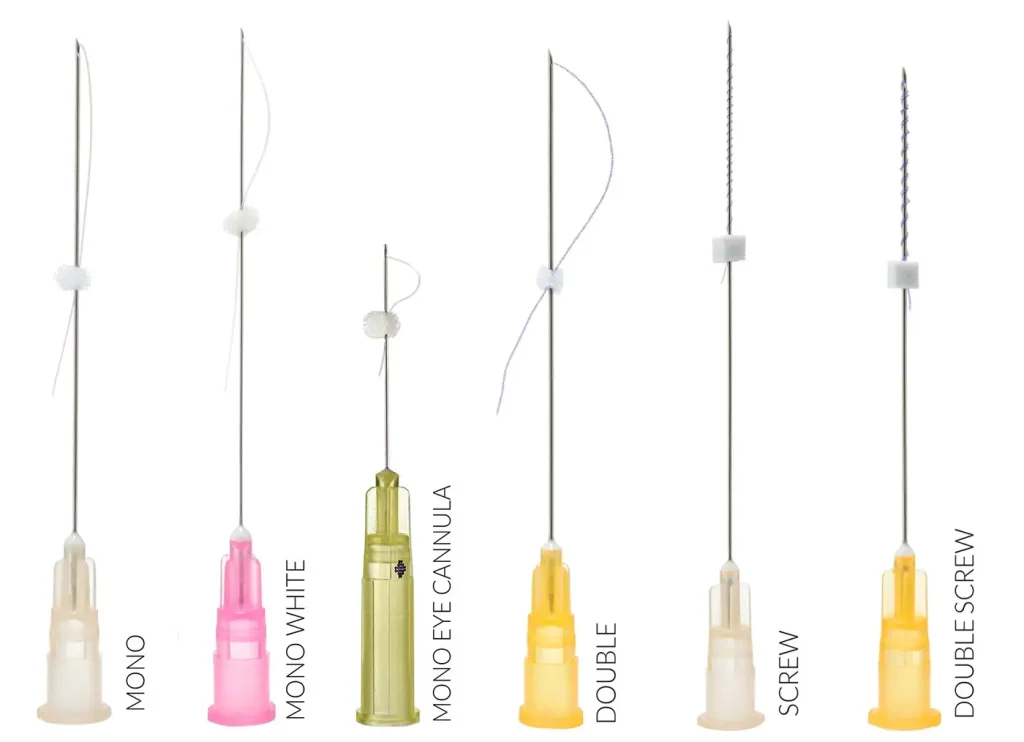
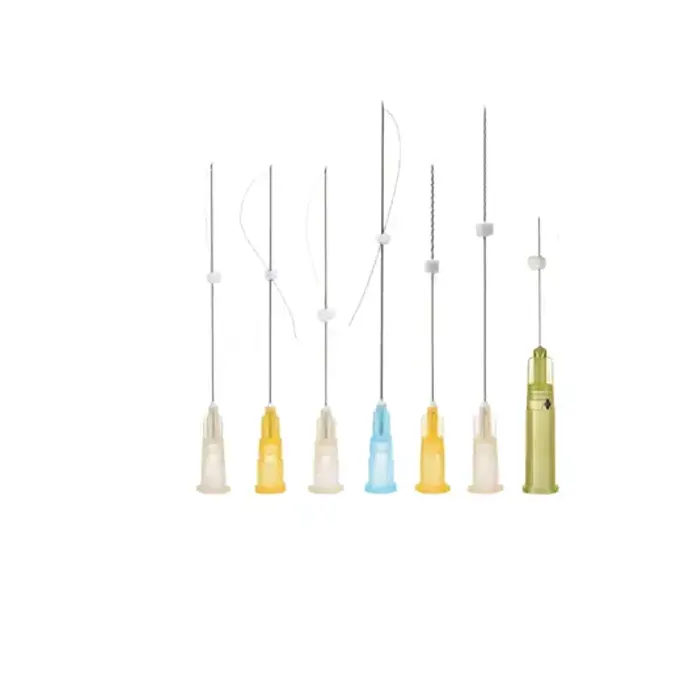
As you may be aware PDO THREADS AU is currently seeking TGA approval and ARTG Inclusion for the Bijou Range of THIN PDO thread models. The team and I are very excited to bring this new range to the Australian market. While there are some models you may be familiar with (ie: Mono, Screw and Double Screw Threads), we will also be introducting three NEW model types: Mono White Threads, Double Threads and Mono Eye Cannula Threads:
Mono White Threads – are a NEW type of Mono Thread. These have the SAME efficacy as a standard Mono Thread, but WITHOUT any dye or pigmented colour in the PDO suture (they’re clear/undyed).
Double Threads – consist of TWO twisted monofilament PDO sutures and have TWICE the efficacy as a standard Mono Thread. These will be the real game changers for scaffolding creation when Thread Lifting.
COG Threads (Thread Lifts) – What to know! #insidersguide
We’ve had lots of questions come in about PDO Cog threads (aka. PDO Thread Lifts), especially how to differentiate between models and the suitability of a model for different areas of treatment. So, I’ve put together a little summary below to help further your understanding as well as rationalise the theory behind cog thread design.
Do feel free to comment or ask questions, we love to hear from you!
NTRODUCTION TO COG THREADS
What separates your THIN Thread PDO models (ie: monos, screws, doubles) from your COG Thread PDO models (Cog 360˚ & Molding Cogs) are the “barbs” (the little hooks) located along the axis of the PDO suture. The reason we can’t technically “lift” skin with PDO Thin Thread models, is that when pressure is applied to these PDO sutures to lift the skin, a thin thread being “smooth” has no resistance when placed under the epidermis layer – there’s nothing to “capture/hold/tow” the thread, to then allow the skin to lift. If you’ve ever tried pulling on a PDO Thin Thread post insertion, they more or less slide straight back out. They’re great for placing under the skin, but NO good for physically lifting the skin.
This is why PDO sutures with BARBS exist (aka. COG Threads), these barbs are able to grasp a foothold under the epidermis layer of the skin, so when pressure is applied to the thread against the direction of the skin, the barbs create a resistance, which allows you to tow, lift and hold the skin in a fixed position.
There are TWO important considerations when selecting a cog thread model and variant (1) Barb DISTRIBUTION and (2) Barb DIRECTION
CONSIDERATION 1
Barb Distribution “the HOLD”
The efficacy of each COG thread is very much dependant on the “placement” of the barbs along the PDO suture axis.
GREATER distribution = GREATER adherence = GREATER tow = GREATER lifting potential
This is why 360˚ cog threads are considered to be the “golden standard” among cog threads. They have lots of evenly dispersed barbs across the ENTIRE axis of the PDO suture (if you run your index and thumb finger against the direction of the barbs on a 360˚ thread, you’ll feel them on all sides of the thread.
PDO COG Thread models that aren’t as efficacious as the 360˚ threads is due to limited barb distribution – they’re limited to one axis (90˚) or two axes (180˚), as opposed to the entire 360˚ axis:
Order of efficacy of distribution “hold” (Highest Longevity to Lowest Longevity):
(360˚ 6-dimensional)
(Bi- direction Double Sided)
(Multi-Direction Double Sided)
(Multi-Direction One Side)
(Single Direction One Side)
CONSIDERATION 2
Barb Direction “ONE way or TWO way effect”
Think of the “ONE way effect” as lifting against gravity (aka. Tension pulling in an upward direction only) and the “TWO way effect” as lifting against and with gravity (aka. Tension pulling in both an upward and downward direction) – if you’re a previous physics student – think of the concepts behind force and tension 🤓!
Ie: (Two way effect)
When conducting a Thread Lift consultation, it’s important to assess what’s more important to achieving the results you want: CONSIDERATION 1 or CONSIDERATION 2. If the goal is to lift in ONE direction only (aka. Against gravity – ie: face, neck or eyebrow lifting – multiple barb directions doesn’t matter as we want everything lifted in ONE direction “up”). In this instance, Consideration 2 isn’t as important – we’re less concerned about the direction of the barbs, and more concerned about Consideration 1 (the distribution of the barbs) to achieve that optimum lift effect:
= For Face Thread Lifting & Eye Brow Lifting, Consideration 1 supersedes Consideration 2, so our best option would be a 6-dimensional 360 barb suture (aka. Bijou Cog 360˚).
Alternatively, if our goal is a TWO way direction lift (ie: Nose Lifting – where you want lift from both the bridge and the nasal tip – aka tension pulling the tip upwards while simultaneously keeping the bridge lifted) we’d be less concerned about the distribution of barbs (Consideration 1), and more concerned about the direction of the barbs (Consideration 2). To prevent confusion, most suppliers will simply name these types “Nose” Threads, as they’re specially designed for a two way lifting effect.
= For Nose Lifting , Consideration 2 supersedes Consideration 1, so our best option would be a Bi-directional Double Sided barb suture (aka. Bijou Nose Cog Cannulas)
NEEDLE GAUGE or USP?
A good cosmetic practitioner will consider BOTH Needle Gauge and PDO Suture USP. For those who are new to suture and PDO numerics, the general rules are as follows:
Needle Gauge: The LOWER the needle gauge size, the THICKER the needle is:
ie: 30G < 27G < 21G < 19G < 18G
(thinnest to thickest)
PDO Suture Size: The HIGHER the USP, the THICKER the suture is:
Some cosmetic practitioners go by needle gauge to determine cog thread suitability (ie: 18G, 19G..ect). However, we strongly recommend looking at BOTH the Needle Gauge and PDO suture USP. Why? Different PDO Thread Brands have different USP sizes for their respective Needle Gauge Sizes.
At PDO Threads AU you’ll find for the same needle gauge size, the Bijou COG threads have a slightly thicker PDO cog suture when compared to other cog thread models. For example, while an 18G Molding Cog and a 18G Cog Master Type II both possess the same 1-0 USP suture thickness, this is very different from an 18G Bijou Cog 360˚ that has a much thicker 2 USP. The same goes, when comparing 19G needle gauges, a 19G Molding Cog has a 2-0 USP, but a a 19G Bijou Cog 360˚ has a much thicker 0 USP.
DOES A HIGHER USP MEAN “BETTER”?
While yes, a thicker PDO suture for a variant will have greater “hold” and “lifting potential” – the thicker the PDO suture, the more tenderness some patients notice post treatment.
Ideally you want to find that perfect balance between ‘Maximum Potential Lift’ WITHOUT compromising patient comfort.
Additionally, depending on “how” much and “where” the lift is needed, some practitioners find that instead of using 2-4 thick 18G Bijou 360˚’s on each side of the face, they’ll instead revise their approach and use 4-8 21G or 19G Bijou 360˚s (more threads = more lifting from different areas = and smaller USP = decreased risk of tenderness post treatment).
Many of our clients, including medical practitioners use either and the 19G/21G Bijou 360˚’s or 18G/19G Epline Molding Cogs, and most will use between 4 to 8 cog threads depending on which areas are being treated. To put things into perspective, we only have three doctors at the moment who are using the 18G Bijou 360˚’s, one of them is a partnered trainer and the other two completed PDO Thread Lift training courses with Plastic Surgeons in South Korea. And even still, these doctors will often resort to 21G and 19G 360˚’s, leaving the 18G’s for a very narrow window of patients.
Our PDO Threads are classified as Class III Medical Devices, they may only be used by registered health practitioners (Doctors, Dentists or Nurses)
Current and unrestricted AHPRA registration
Professional indemnity insurance
Resume (with proven cosmetic medicine experience of at least 1-2 years)
For Registered Nurses & Nurse Practitioners – a completed Diploma of Cosmetic Nursing or a compliant/approved Cosmetic Nursing Course
*For interstate candidates, we strongly recommend checking your state regulations (as well as authorising body – aka AHPRA) prior to commencing PDO Thread and or Thread Lift training in WA to ensure you’re practicing both lawfully and safely.
All new clients will first be required to undergo the introduction course that provides information necessary to building a strong foundation for PDO threads. The introduction also covers the management of complications.
DOCTORS / DENTISTS
Doctors and dentists can go on to learn both PDO Thin and Cog threads (face lifting) that can be done over 2 days. This includes lots of hands-on practice that allows them to gain confidence in performing the procedures.
REGISTERED NURSES / NP’S
Nurses will begin with PDO Thin thread training and will be allowed to start Cog thread training once they have gained adequate experience with the thin threads.
MASTER CLASSES:
Nose
Eyebrow lift
Fox eyelift
Submental fat lift
Neck lift
Neck Rejuvenation
Practitioners can also go on to learn more advanced thread lifting techniques once they have mastered the basic thread lifting techniques. This would include Subdermal Fat Lifting, Eyebrow Lift, Fox Eye Lifts, Neck and Nose Lift.
Course participants are encouraged to bring their own models. However, if the participants are not able to find a model, a model can be sourced for you.
“At Equinox Aesthetic Academy, we pride ourselves upon safe and high-quality aesthetic education. We ensure that all our potential course participants meets the requirements to practice safely and competently.“
– Equinox Cosmetic & Beauty Clinic
www.equinoxclinic.com.au
To register your interest or for further information, please contact Admin@equinoxaestheticcacademy.com.au and we’ll forward your enquiry to Equinox Training Team. Alternatively, you may also contact Equinox directly at training@equinoxclinic.com.au
*For interstate candidates, we strongly recommend checking your state regulations (as well as authorising body – aka AHPRA) prior to commencing PDO Thread and or Thread Lift training in WA to ensure you’re practicing both lawfully and safely.
Equinox Aesthetic Academy committed to the highest standards of non-surgical cosmetic injectable and thread Lift training in-line with the latest guidelines. We are distinguished from other training providers by not just running a training course but ensuring a well-balanced combination of hands-on practical experience as well as informative, well-structured theoretical and assessment components. The educators at the EAA are all experts in their field of specialty and with many years of aesthetic medicine experience.
At the EAA, our approach ensures all training participants receive quality value-for-money service that equips them with the skills and knowledge to enter or progress in the aesthetic industry. Our participants would be able to effectively deliver injectable and dermal treatments safely to clients.
Take your first steps into the exciting world of aesthetics with Equinox Training.
If you have no experience of injecting, we know that the thought of a practical session can be quite daunting. Equinox Training offer the opportunity to complete the first practical stage using Silicon face model (manikin).
After that, the opportunity to progress onto model clients is offered. We understand that hands on experience is the most effective way to build your knowledge and confidence, that is why we provide the opportunity to practice on both.
Understand advanced muscular anatomy relevant to treatment areas covered in this module.
Learn Upper Face Anti-wrinkle injection Techniques.
Dermal Fillers
Patient Selection
Danger Areas and How to Avoid Complications
How to Manage and Avoid Side Effects and Complications
Patient Ageing
Key Points for Injection
Quiz to test your knowledge.
Certificate of completion
This course is generally recommended for:
Nurses
Doctors
Dentists
Wrinkle Relaxer: The Advanced
Advanced course is aimed at practitioners who have completed our Basic Neurotoxins course and would like to extend their skills to treating advanced level areas of the face.
Your trainer will use their experience to answer your questions, guide you to mastering these advanced procedures and give you the confidence to increase your scope of practice and ultimately your business.
Learn injection techniques for neurotoxins for the brow, nose, chin and perioral areas, taking into consideration the anatomical variations between individuals.
Wrinkle Relaxer: The Basics
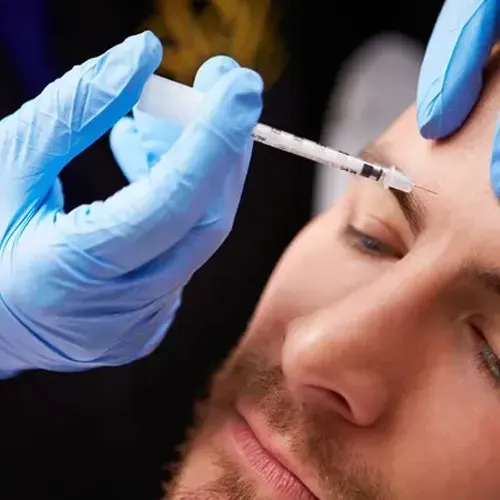
The course focuses on basic facial anatomy and laying the right groundwork for anti-winkle injections. The course cover beginner areas (frown lines, forehead, crow’s feet, masseter). You will also learn about emergency protocols, possible complications and how to avoid them.
COURSE OUTLINE:
Obtaining valid consent
Course covering Areas: Frown Lines, Crow’s Feet, and Forehead Lines.